
From a bestselling author and psychologist, an exploration and celebration of neurodivergence, completely revised with the most up-to-date research and insights.
“Parents, teachers, and policymakers should all read this thought-provoking book. I loved it.’’―Temple Grandin, author of Thinking in Pictures and The Autistic Brain
From ADHD and dyslexia to autism, the number of diagnosis categories listed by the American Psychiatric Association has tripled in the last fifty years. With so many people affected, it is time to revisit our perceptions of people with disabilities.
In the second edition of THE POWER OF NEURODIVERSITY (Grand Central Balance, July 2025), Thomas Armstrong illuminates a new understanding of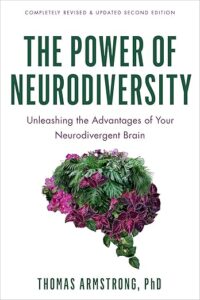 neuropsychological disorders. He argues that if they are a part of the natural diversity of the human brain, they cannot simply be defined as illnesses. Armstrong explores the evolutionary advantages, special skills, and other positive dimensions of these conditions, including: autism, ADHD, dyslexia, schizophrenia, anxiety, intellectual disabilities, and mood disorders.
With an emphasis on positive niche construction for each area, THE POWER OF NEURODIVERSITY is a manifesto as well as a keen look at disability, as well as a must-read for parents, teachers, and anyone who is looking to learn more about neurodivergence.
Reviews
“Parents of children who have been diagnosed as belonging to one of these groups and adults who have been living with any of these labels will find positive affirmation and encouraging advice on how to see their brain’s wiring as an asset rather than a liability.”
―New York Journal of Books
“This quietly spoken book is at its strongest when examining the ideology itself and outlining the arguments in its favor. It is sensible in examining how other cultures, past and present, have accepted forms of neurodiversity, and it is wise in its critique of the use of normative standardizations to identify objectives in education and society in general.”―Times Higher Education Supplement
“Armstrong uses neurodiversity to encompass a new way of thinking about a variety of disabilities . . . by focusing on their potential benefits, rather than their problems . . . useful and uplifting.”―Library Journal
“Armstrong argues that there is no ‘normal’ brain or ‘normal’ mental capability and that we are making a serious mistake in assuming that the kinds of differences we see in people with conditions like autism or dyslexia involve only deficits. People with these conditions also have strengths, he emphasizes, and by focusing on these, rather than on the ‘labels,’ we can find the modes of learning and living that can help them thrive.”―Publishers Weekly
“In this engaging, accessible book, Armstrong offers a thoughtful consideration of cognitive diversity, and many practical suggestions for maximizing the potential of, and increasing respect for, those who are ‘differently brained.’”―Kathleen Seidel, creator of Neurodiversity.com
“An engaging and provocative look into the emerging societal conversation about neurological diversity. Our country has adapted to many new ideas over the last century; acceptance of the broad scope of neurodiversity represents the next step forward.”―Ari Ne’eman, president of The Autism Self Advocacy Network
“Dr. Thomas Armstrong has written a comprehensive guide on neurodiversity for a wide range of diagnoses from ADHD to mood disorders, autism, dyslexia and more. It’s an engaging read with case studies that instill hope for those diagnosed, their loved ones and mental health care professionals. He offers a revolution in strength finding as essential for diagnosis and treatment. This is a must-read for anyone committed to transforming the way we understand and support those with diverse learning, cognitive, and emotional needs.”―Lara Honos-Webb, Ph.D., author of The Gift of ADHD
“The neurodiversity movement suggests that neurological differences should be recognized and respected as a social category akin to ethnicity, sexual orientation, gender, or disability. Thomas Armstrong’s book The Power of Neurodiversity is a seminal work advocating this perspective. Armstrong argues that society should embrace all forms of neurodiversity and recognize that individuals with neurological differences can make unique contributions.’’ ―Psychology Today