
Clean water, paved roads, public transit, electricity and gas, sewers, waste processing, telecommunication, even the Internet – all this infrastructure is what makes cities work and powers our lives, often seamlessly and silently. Virtually everything we do and consume depends on infrastructure. Yet, most people have little to no idea how these systems work. How is water treated? How do cities manage rainwater? Why do traffic jams exist? How is electricity generated and distributed? What happens to trash after it is picked up? How does the Internet work?
In THE INFRASTRUCTURE BOOK (Prometheus, March 2025), world-renowned urban engineering expert Sybil Derrible reveals the behind-the-scenes machinations of the foundational systems that make our societies function. Visiting sixteen cities around the world and their unique approaches to organizational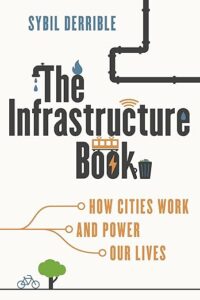 challenges – from water distribution in Hong Kong to waste management in Tokyo, and from Chicago’s power grid to low Earth orbit satellites in space – this highly readable book uses fascinating case studies and historical detours to show how infrastructure works – and, sometimes, doesn’t.
With large-scale infrastructure repairs looming and the need for existing infrastructure to be transformed, the book also shows how infrastructure can be more sustainable and resilient. After reading The Infrastructure Book, readers will never look at a city the same way.
Review
“Like a magician revealing the secrets of how amazing things happen, Sybil Derrible describes in fascinating detail the underlying foundation of our social fabric. The Infrastructure Book is a must-read.” — Feniosky Peña-Mora, 2025 president of the American Society of Civil Engineers
About the Author
Sybil Derrible is a professor of urban engineering and director of the Complex and Sustainable Urban Networks Laboratory at the University of Illinois Chicago. He is a world-renowned scholar on infrastructure and a lead author on the United Nations Environmental Program’s Seventh Global Environment Outlook (GEO-7) report. He received the Walter L. Huber Research Prize from the American Society of Civil Engineers and a CAREER Award from the US National Science Foundation.